
The studio / Masterwork Surfaces
Considered together.
Finished by hand.
A boutique finish studio based in McMinnville. We bring microcement, plaster, and architectural surfaces to homes with a point of view.
Share your idea ↗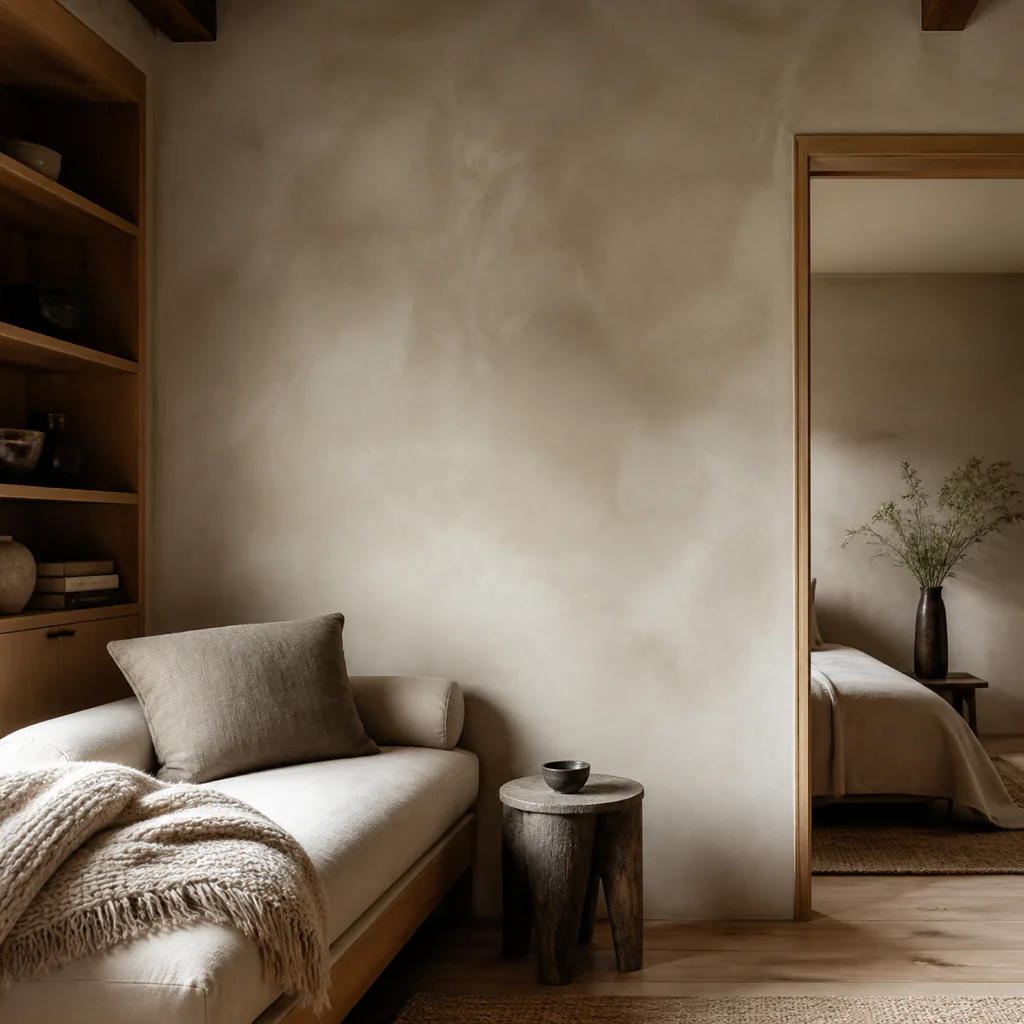
A personal process
Every finish begins
with listening.
The room you have. The feeling you want. The light, the materials, the way you live. These are the starting points.
- 01
The conversation
Tell us about the space and what you are drawn to. A photo, reference, or simple description helps us begin.
- 02
The direction
We review the surface and explore color, movement, texture, and sheen. Samples help establish the character of your finish.
- 03
The proposal
You receive a clear scope covering preparation, the selected system, installation, timing, and care.
- 04
The making
The surface is prepared and the finish applied by hand. Natural variation gives each installation its own character.
- 05
The everyday
We walk through the finished surface and its care, so you know how to live with it beautifully.
Your space, beautifully considered
What would you
love to come home to?
Tell us a little about your idea. We’ll help you find the finish.
Start a conversation Based in McMinnville · Serving the surrounding wine country and west metro