
Microcement
Quiet surfaces.
Sculptural living.
A fireplace with presence. A bathroom that feels like an exhale. Hand-applied microcement brings soft movement and a continuous material feel to the spaces around you.
Imagine it in your space Explore the possibilities ↓
The feeling of the finish
Make simplicity the statement.
Let the form do the talking. We explore tone, texture, and the way light moves across your space, then shape a finish around the surface and the life it will live.
A single, sculptural gesture
Give the room
its focal point.
The sweep of a hood. The quiet mass of a fireplace. Microcement can make separate surfaces read as one considered form.
Tell us about your idea ↗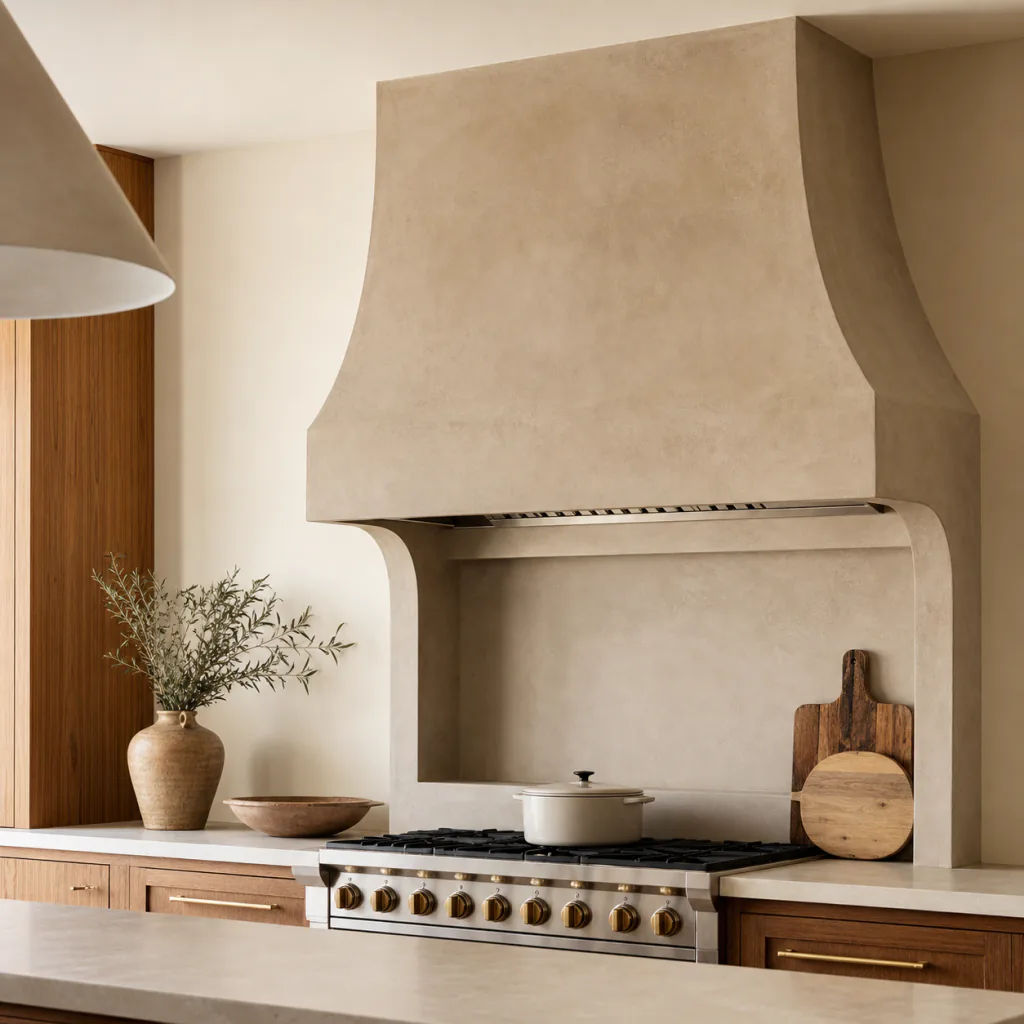
Beautifully considered, from the beginning
The look you love.
The details handled.
We start with your idea, review the space, and work through samples and a clear proposal. You can explore the practical details below, or simply begin with a conversation.
Let’s talk about your space ↗Is this finish right for my space?
Microcement is not a promise of zero joints, zero movement, zero maintenance, or installation over every existing finish. The written scope should identify the selected system, substrate assumptions, preparation, transitions, protection, exclusions, cure, and care.
- What is the substrate and how is it assembled?
- Is the existing finish fully bonded, flat, and stable?
- Where can movement occur at joints, corners, edges, and transitions?
- What moisture, heat, traffic, UV, or cleaning exposure exists?
- What preparation, reinforcement, build coats, protection, and cure does the exact system require?
- What adjacent work or repair must happen before finish installation?
Materials & preparation
Meoded Concretta FS
A microcement direction considered for project-specific interior, wet-area, and architectural applications under the current complete-system instructions.
SEMCO Surfaces X-Bond
An architectural coating direction considered around the existing surface, intended exposure, preparation, detailing, and current technical requirements.
Can microcement go over existing tile?
Sometimes, but not automatically. Tile bond, grout lines, movement, flatness, transitions, moisture exposure, and the complete preparation sequence must be reviewed first.
Does that mean no demolition?
No. A suitable existing assembly may allow less tear-out, while failed, moving, wet, contaminated, or poorly detailed surfaces need correction or removal.
Can it be used in a shower?
Only as part of a suitable, complete wet-area assembly with the exact substrate, waterproofing, detailing, protection, cure, and maintenance requirements confirmed for that system.
Will a small sample match the whole room?
A sample establishes color, movement, texture, and sheen direction. Scale, lighting, batch, substrate, hand application, and protection make the full installation naturally variable.
Your space, beautifully considered
What would you
love to come home to?
Tell us a little about your idea. We’ll help you find the finish.
Start a conversation Based in McMinnville · Serving the surrounding wine country and west metro