
Epoxy & resinous floors
A hardworking space.
Beautifully finished.
Turn the garage, workshop, or utility room into a space that feels as considered as the rest of your home.
Imagine it in your space Explore the possibilities ↓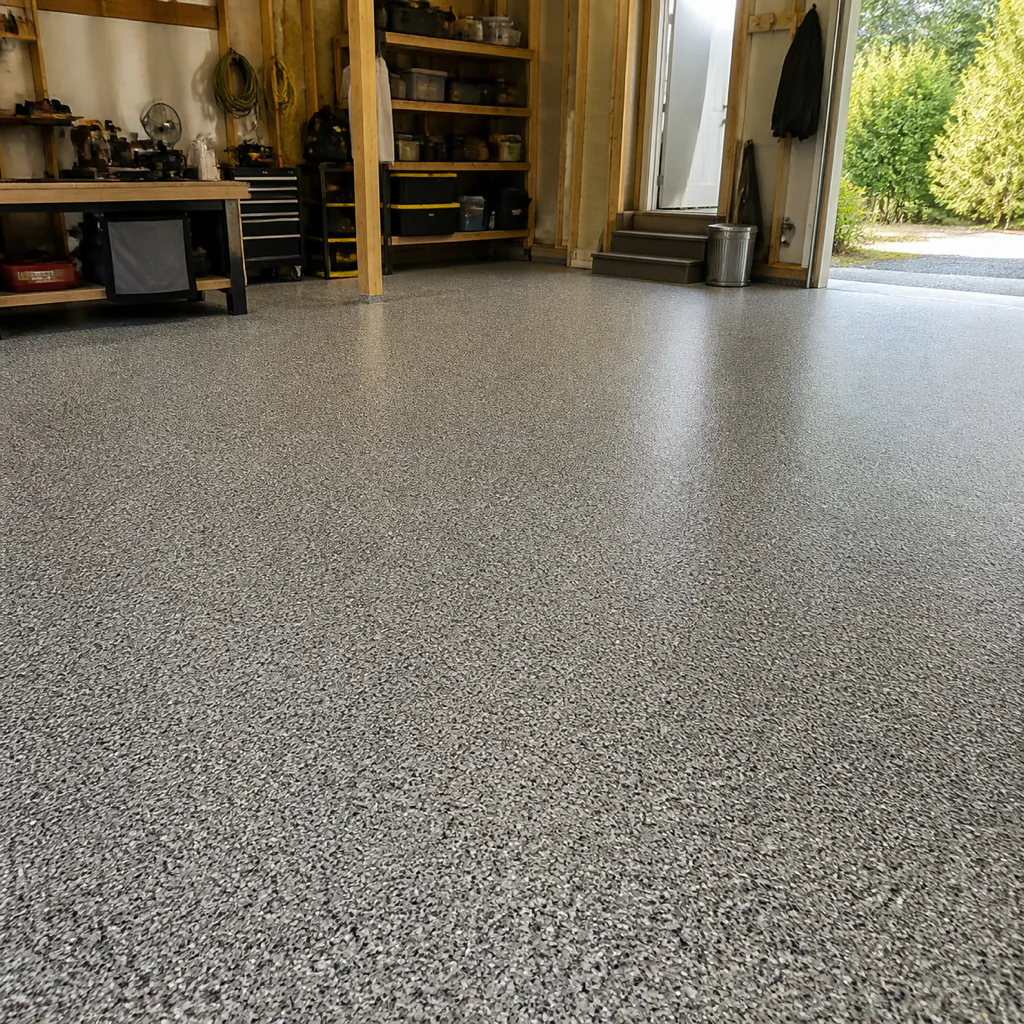
The feeling of the finish
Walk into a more finished space.
A balanced flake blend, a coherent surface, and a floor chosen around how you use it. We help you find the right look, then plan the preparation and complete coating system beneath it.
Beautifully considered, from the beginning
The look you love.
The details handled.
We start with your idea, review the space, and work through samples and a clear proposal. You can explore the practical details below, or simply begin with a conversation.
Let’s talk about your space ↗Is this finish right for my space?
A coating does not erase the behavior of the slab. Crack treatment, joints, moisture, contamination, and movement remain visible scope decisions rather than hidden promises.
- Is there moisture transmission or a history of water entry?
- What oil, silicone, tire treatment, chemical, or other contamination may be present?
- Are cracks dormant, active, previously repaired, or tied to movement?
- What existing coating must be identified and removed?
- How will the slab be mechanically prepared and edges detailed?
- What traffic, traction, sunlight, cleaning, cure, and return-to-service conditions apply?
Materials & preparation
Leggari flake floor systems
Full-flake and related resinous directions assembled from the current project-specific preparation, primer, broadcast, topcoat, cure, and use documentation.
Selected decorative resinous systems
Considered only when the intended appearance, slip direction, UV exposure, traffic, maintenance, and slab conditions support the complete build.
Will the new floor hide every crack?
No. Cracks and joints are evaluated and treated according to their type, but active movement can telegraph or recur. The proposal should state the repair and movement boundaries.
Can you coat over an existing garage-floor paint?
A previous coating must be identified, tested, and usually removed as part of preparation. A new system should not depend on an unknown or failing layer.
How do you choose the flake blend?
Color matters, but so do coverage, texture, lighting, dirt visibility, adjacent materials, and the desired visual calm. The blend follows the slab and use review.
When can the garage be used again?
Return-to-service depends on the exact products, temperature, humidity, coat sequence, vehicle traffic, and current cure guidance. The written scope should state the project-specific boundary.
Your space, beautifully considered
What would you
love to come home to?
Tell us a little about your idea. We’ll help you find the finish.
Start a conversation Based in McMinnville · Serving the surrounding wine country and west metro